
Smart Loan Guide is important for anyone who wants to understand loans, interest rates, debt management, and financial planning. Loans have become an essential part of modern life because they help individuals and businesses achieve important financial goals without waiting years to save enough money.
People use loans for many different purposes such as buying homes, paying for higher education, starting businesses, managing emergencies, and improving financial stability. While loans can create opportunities and financial growth, poor borrowing decisions can also lead to debt problems, financial stress, and long-term repayment difficulties.
Many beginners take loans without understanding how interest rates work, how credit scores affect loan approval, or how repayment systems impact long-term financial health. This lack of financial knowledge often creates unnecessary debt burdens.
This detailed Smart Loan Guide explains everything beginners need to know about personal loans, student loans, business loans, home loans, credit scores, loan repayment strategies, interest rates, and smart borrowing methods. By understanding these financial concepts, borrowers can make safer financial decisions and build stronger long-term financial stability.
Whether you are planning to apply for your first personal loan, finance your education, buy a house, or expand a business, this beginner-friendly guide will help you understand how to manage loans responsibly and avoid common borrowing mistakes.

What Is Loan?
A loan is money borrowed from a bank, lender, financial institution, or online financing company that must be repaid over time with additional interest charges. Loans are legal financial agreements between borrowers and lenders where the borrower agrees to repay the borrowed amount according to specific terms and conditions.
Loans allow people and businesses to access funds immediately instead of waiting years to save money. Borrowers receive the required amount upfront and gradually repay it through monthly installments over a fixed repayment period.
Every loan includes several important components:
- Principal amount
- Interest rate
- Loan duration
- Monthly repayment amount
- Processing fees
- Loan terms and conditions
The principal amount refers to the original money borrowed from the lender. Interest is the extra amount charged by lenders for providing financial support. The repayment period determines how long the borrower has to repay the loan completely.
Loans are generally divided into two main categories:
Secured Loans
Secured loans require collateral such as:
- Property
- Vehicles
- Land
- Savings accounts
If borrowers fail to repay the loan, lenders may take ownership of the collateral to recover losses.
Examples include:
- Home loans
- Auto loans
- Property financing
Secured loans usually offer lower interest rates because lenders face lower financial risk.
Unsecured Loans
Unsecured loans do not require collateral. Approval depends mainly on:
- Credit score
- Income level
- Financial history
- Employment stability
Examples include:
- Personal loans
- Credit cards
- Student loans
Unsecured loans usually have higher interest rates because lenders face greater financial risk.
Understanding loan structures is extremely important because responsible borrowing improves financial opportunities, while poor loan management can create serious long-term debt problems.

Why Loans Are Important
Loans play a major role in helping individuals and businesses achieve financial goals and improve financial flexibility.
Without loans, many people would struggle to:
- Buy homes
- Pay for education
- Start businesses
- Handle emergencies
- Manage large expenses
Loans provide financial support during important life stages and help people improve their quality of life.
Education Support
Student loans help students pay:
- Tuition fees
- Books
- Accommodation
- Transportation
- Educational materials
Higher education costs continue increasing globally, making student loans essential for many families and international students.
Education financing allows students to develop professional skills, build successful careers, and increase future earning potential.
However, students should borrow responsibly because poor repayment planning can create long-term financial stress after graduation.

Home Ownership
Home loans or mortgages help individuals purchase houses and apartments without paying the full property cost immediately.
Real estate prices are often too expensive for most families to pay using savings alone. Home loans make long-term property ownership possible through manageable monthly installments.
Benefits of home ownership include:
- Financial security
- Property investment growth
- Stable housing
- Long-term wealth building
Home loans are considered one of the biggest financial responsibilities in life, so borrowers should carefully evaluate affordability before purchasing property.

Business Expansion
Business loans help entrepreneurs:
- Start new businesses
- Expand operations
- Purchase equipment
- Hire employees
- Improve productivity
- Increase inventory
Many successful companies depend on business financing during startup and growth stages.
Proper business financing supports economic growth, job creation, and long-term profitability. However, business owners should carefully analyze repayment abilities before borrowing money.

Emergency Financial Support
Unexpected financial emergencies can happen at any time. These may include:
- Medical emergencies
- Car repairs
- Job loss
- Family emergencies
- Home repairs
Personal loans help individuals manage urgent expenses without selling valuable assets or disrupting long-term financial plans.
Emergency borrowing should still be managed carefully because high-interest debt can create additional financial pressure.
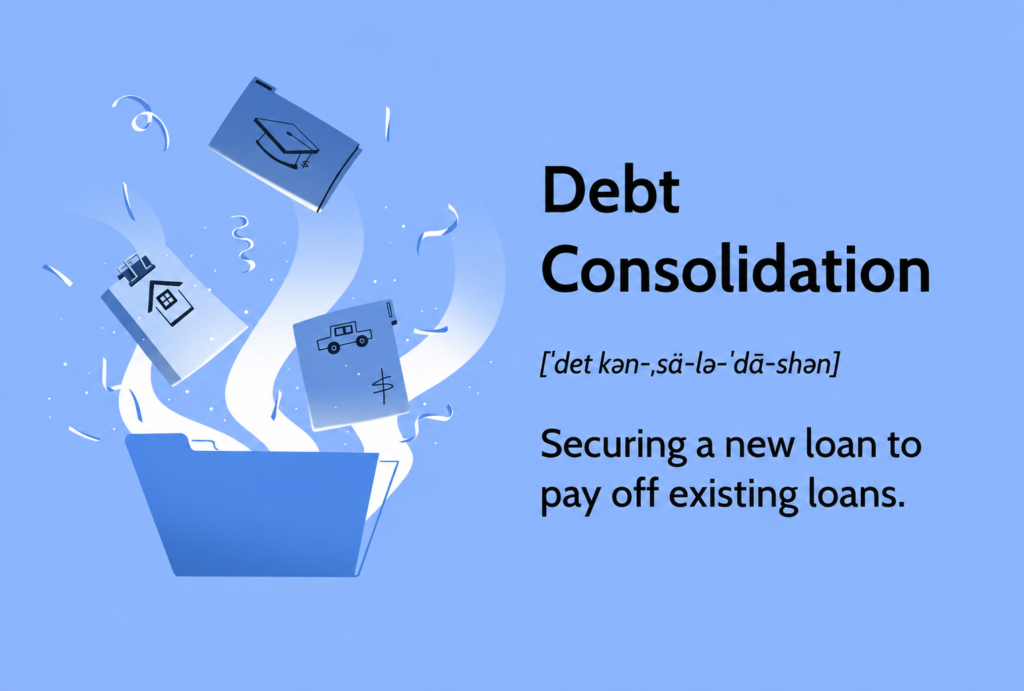
Debt Consolidation
Debt consolidation loans combine multiple debts into one monthly payment.
Instead of managing several:
- Credit card bills
- Loan payments
- High-interest debts
Borrowers can simplify finances through one repayment plan.
Debt consolidation may help:
- Reduce financial stress
- Improve budgeting
- Lower interest costs
- Simplify money management
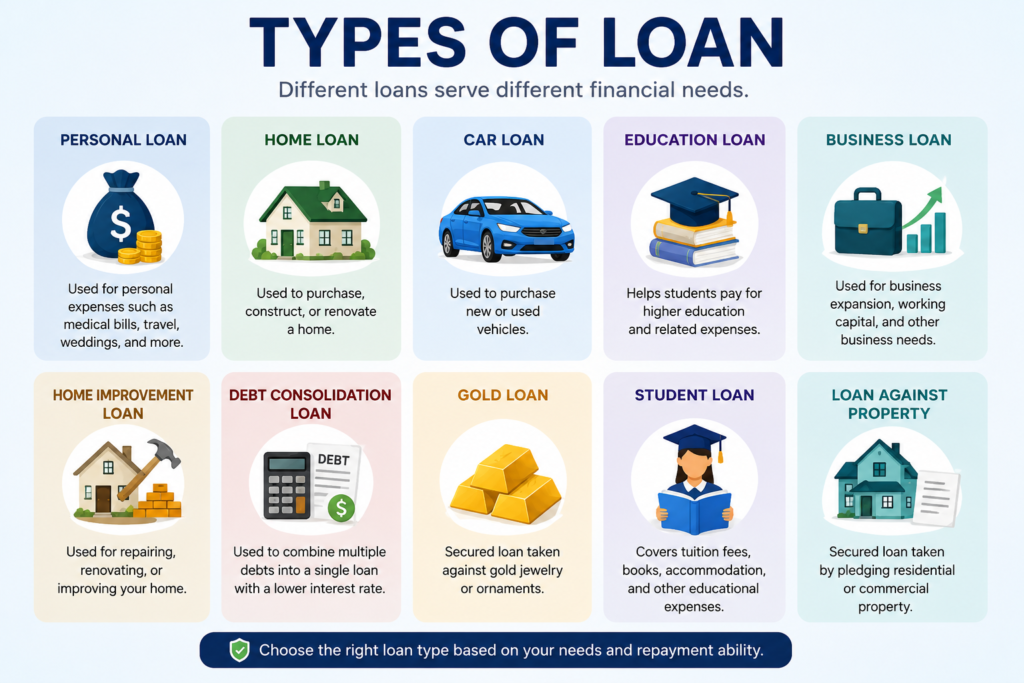
Types of Loans
Different loan types are designed for different financial situations and repayment abilities.
Understanding loan categories helps borrowers select the most suitable financing options.
Personal Loan
Personal loans are flexible financing options used for:
- Medical expenses
- Weddings
- Travel
- Debt consolidation
- Home improvement
- Emergency expenses
Personal loans are usually unsecured loans, meaning collateral is not required.
Benefits of Personal Loans
- Fast approval process
- Flexible spending options
- Fixed monthly payments
- Easy online applications
- Short processing times
Risks of Personal Loans
- Higher interest rates
- Late payment penalties
- Credit score impact
- Debt accumulation risk
Borrowers should compare interest rates, repayment terms, and lender conditions before applying for personal loans.

Home Loan
Home loans help individuals purchase residential property through long-term repayment systems.
Mortgage loans generally offer lower interest rates because the property acts as collateral.
Benefits of Home Loans
- Home ownership opportunities
- Long repayment periods
- Real estate investment growth
- Stable monthly installments
- Property appreciation potential
Risks of Home Loans
- Long-term financial commitment
- Property maintenance costs
- Foreclosure risk
- Interest rate changes
Borrowers should carefully calculate affordability before taking home financing.
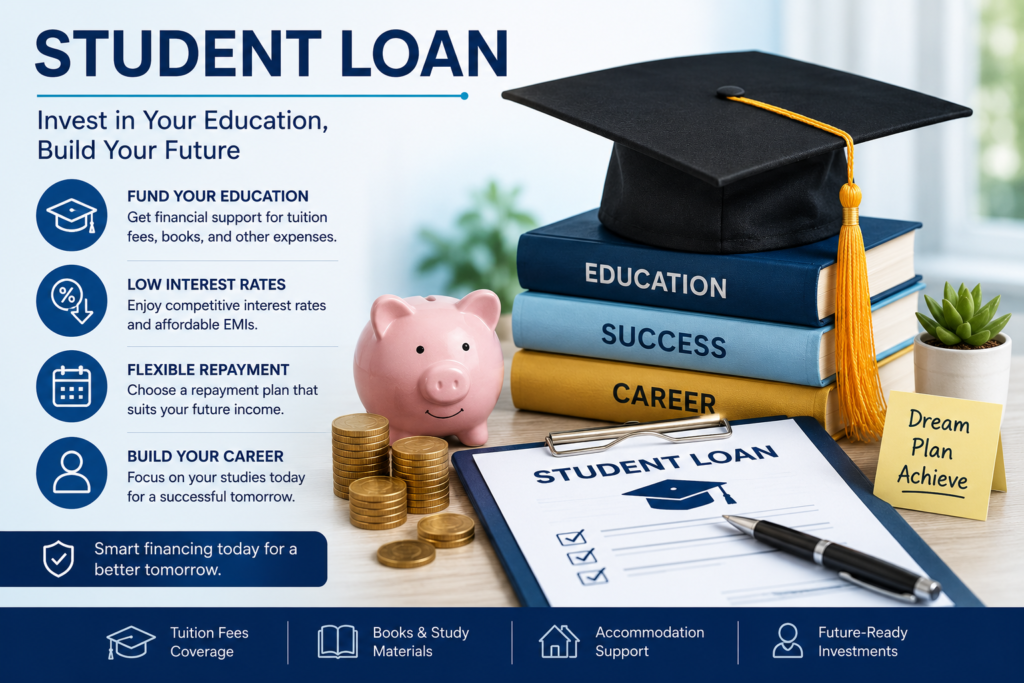
Student Loan
Student loans support education and career development opportunities.
Educational financing programs are available through:
- Governments
- Banks
- Private lenders
- Universities
Benefits of Student Loans
- Access to higher education
- Career development opportunities
- Flexible repayment systems
- Better future income potential
Challenges of Student Loans
- Long-term debt burden
- Interest accumulation
- Financial pressure after graduation
Students should focus on career planning and repayment strategies before borrowing education funds.
Borrowers should compare lenders carefully before selecting personal loan options.
Home loans are considered one of the largest financial responsibilities for many families.
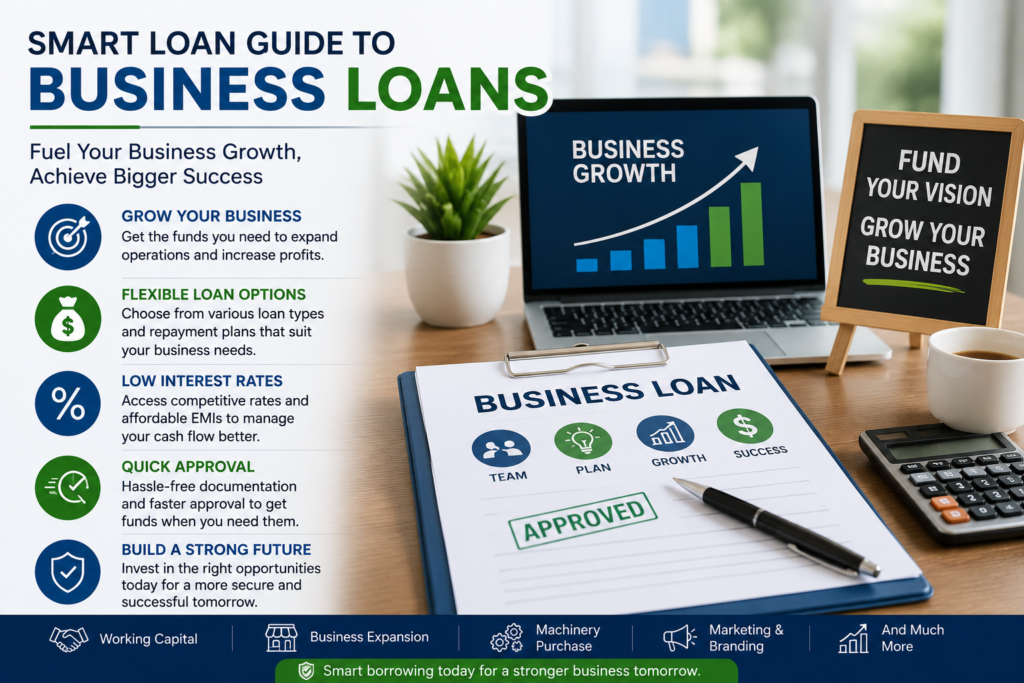
Smart Loan Guide to Business Loans
Business loans are financial tools that help entrepreneurs, startups, and companies manage business expenses, expand operations, and improve long-term growth. Many successful businesses around the world rely on business financing to increase productivity, purchase equipment, hire employees, manage cash flow, and invest in future opportunities.
Smart Loan Guide explains that business loans can be extremely helpful when used responsibly and strategically. Instead of waiting years to save enough capital, businesses can access immediate financial support and gradually repay the amount over time through structured repayment plans.
Business loans are commonly used for:
- Starting a new business
- Expanding company operations
- Purchasing machinery and equipment
- Hiring employees
- Managing inventory
- Marketing and advertising
- Office renovation
- Cash flow management
There are different types of business loans available depending on company size, financial needs, and repayment ability.
Types of Business Loans
Business loans support startups, small businesses, and growing companies.
Business financing may include:
- Startup financing
- Equipment loans
- Working capital loans
- Commercial property loans
Benefits of Business Loans
- Business growth opportunities
- Increased productivity
- Better cash flow management
- Expansion support
- Revenue improvement
Risks of Business Loans
- Financial pressure during low-profit periods
- Interest expenses
- Repayment risks
Businesses should analyze cash flow and future profitability before taking loans.
Understanding Loan Interest Rates
Interest rates are one of the most important parts of borrowing money because they determine the total cost of loans.
Interest represents the extra amount borrowers pay to lenders for using borrowed funds.
Loan interest rates depend on several factors:
- Credit score
- Income stability
- Financial history
- Loan amount
- Market conditions
- Repayment period
Lower interest rates reduce overall repayment costs, while higher interest rates increase long-term financial burden.
Even small interest rate differences can significantly affect total repayment amounts over time. Comparing lenders carefully helps borrowers save money and select better financing options.
Startup Loans
Startup loans help new businesses cover initial setup costs such as office rent, licenses, inventory, and marketing expenses.
Equipment Financing
Equipment loans help businesses purchase machinery, vehicles, computers, and production equipment without paying the full cost immediately.
Working Capital Loans
Working capital loans support daily operational expenses including salaries, rent, inventory, and utility bills.
Commercial Property Loans
Commercial loans help businesses purchase offices, warehouses, or commercial buildings for long-term business growth.
Benefits of Business Loans
Business financing offers many important advantages for entrepreneurs and companies.
Business Expansion Opportunities
Business loans help companies expand into new markets, increase production capacity, and improve profitability.
Improved Cash Flow
Loans help businesses manage temporary cash shortages and maintain smooth operations during difficult financial periods.
Better Productivity
Companies can invest in modern technology, advanced equipment, and skilled employees to improve efficiency and business performance.
Increased Revenue Potential
Proper financial investment can help businesses attract more customers, improve services, and increase long-term revenue.
Building Business Credit
Responsible loan repayment improves business credit scores and increases future financing opportunities.
Risks of Business Loans
Although business loans provide many benefits, borrowers should also understand the risks involved.
Repayment Pressure
Businesses must repay loans even during periods of low profit or economic uncertainty.
Interest Costs
Higher interest rates can increase financial burden and reduce profitability if borrowing is not managed carefully.
Financial Risk
Poor financial planning or weak cash flow management may create repayment difficulties and long-term debt problems.
Collateral Risk
Some business loans require collateral such as property or equipment, which lenders may seize if repayments are missed.
Smart Loan Guide Tips for Business Borrowing
Smart Loan Guide recommends several strategies for responsible business financing.
Borrow Only What Is Necessary
Businesses should avoid taking excessive loans that create unnecessary financial pressure.
Compare Multiple Lenders
Comparing lenders helps businesses find lower interest rates and better repayment conditions.
Create a Repayment Plan
Every business should calculate monthly repayment ability before borrowing money.
Monitor Business Cash Flow
Strong cash flow management helps companies avoid missed payments and financial stress.
Use Loans for Growth
Business loans should be used for productive investments that improve long-term revenue and profitability.
How Credit Scores Affect Business Loans
Lenders often evaluate:
- Business credit history
- Revenue performance
- Existing debts
- Financial stability
- Repayment history
Higher business credit scores improve:
- Loan approval chances
- Lower interest rates
- Better financing conditions
Maintaining healthy financial records is essential for long-term business success and future borrowing opportunities.
Fixed vs Variable Interest Rates
Fixed Interest Rates
Fixed interest rates remain constant throughout the repayment period.
Advantages
- Stable monthly payments
- Better budgeting
- Predictable expenses
Variable Interest Rates
Variable interest rates change according to market conditions.
Advantages
- Lower initial rates
Risks
- Unpredictable payments
- Future rate increases
How Credit Scores Affect Loan Approval
Credit scores are financial ratings used by lenders to evaluate borrower reliability.
Higher credit scores improve:
- Loan approval chances
- Lower interest rates
- Better repayment terms
Poor credit scores may result in:
- Loan rejection
- Higher borrowing costs
- Strict financial conditions
Smart Loan Guide to Managing Loans Successfully
Proper loan management helps borrowers avoid financial stress and maintain financial stability.
Borrow Only What You Need
Taking unnecessary loan amounts increases repayment pressure and financial stress.
Create a Repayment Budget
Creating a repayment budget is one of the most important steps in Smart Loan Guide because proper budgeting helps borrowers manage monthly loan payments without creating financial stress. Many people face repayment problems because they borrow money without planning their monthly expenses, savings, and financial responsibilities properly.
Smart Loan Guide recommends that borrowers create a realistic monthly budget before applying for any personal loan, home loan, student loan, or business loan. A proper repayment budget helps individuals understand how much money they can comfortably repay every month while still managing daily living expenses.
A strong repayment budget improves:
- Financial stability
- Monthly money management
- Emergency preparedness
- Loan repayment consistency
- Long-term financial success
Borrowers should calculate:
- Monthly income
- Essential expenses
- Savings goals
- Existing debts
- Loan repayment amounts
This process helps borrowers avoid financial pressure and reduces the risk of missed payments.
One of the best budgeting methods recommended in Smart Loan Guide is the 50/30/20 budgeting rule.
50% Needs+30% Wants+20% Savings
Pay More Than Minimum Payments
Paying more than the minimum monthly payment is one of the smartest financial strategies recommended in Smart Loan Guide because it helps borrowers reduce total interest costs and repay loans faster. Many people only pay the minimum required amount every month, which may keep the loan active for many years and significantly increase the total repayment amount.
Smart Loan Guide explains that extra payments directly reduce the principal loan balance. When the principal amount decreases faster, the interest charged over time also becomes lower. This strategy helps borrowers save money and achieve financial freedom more quickly.
Benefits of paying more than minimum payments include:
- Lower total interest costs
- Faster loan repayment
- Improved financial stability
- Reduced debt burden
- Better credit score improvement
- Increased long-term savings
Even small additional payments every month can make a major difference over time. For example, adding a small extra amount to monthly loan payments may shorten repayment periods by several months or even years.
Smart Loan Guide encourages borrowers to:
- Use bonuses or extra income for loan repayment
- Make additional payments whenever possible
- Focus on high-interest loans first
- Avoid unnecessary spending habits
Responsible repayment habits improve long-term financial health and reduce financial stress.
Avoid Late Payments
Avoiding late payments is extremely important for maintaining financial stability and protecting credit scores. Smart Loan Guide explains that missed or delayed payments can create serious financial problems that affect future borrowing opportunities.
Many lenders charge penalties and late fees when borrowers fail to pay installments on time. Repeated missed payments may also reduce credit scores and increase future loan interest rates.
Late payments can:
- Damage credit scores
- Increase penalties
- Create financial stress
- Reduce future loan approval chances
- Increase borrowing costs
- Affect financial reputation
Smart Loan Guide recommends several strategies to avoid late payments:
- Set automatic payment reminders
- Use online banking alerts
- Create a monthly repayment budget
- Keep emergency savings
- Track payment deadlines regularly
Borrowers who consistently make payments on time usually maintain stronger credit scores and better financial stability.
Common Loan Mistakes to Avoid
Understanding common borrowing mistakes is important because poor financial decisions can create long-term debt problems and financial stress. Smart Loan Guide helps beginners avoid these mistakes by improving financial awareness and responsible borrowing habits.
Borrowing More Than Necessary
Many borrowers take larger loans than they actually need, which creates unnecessary repayment pressure and higher interest costs. Smart Loan Guide recommends borrowing only the amount required for essential financial needs.
Large unnecessary loans increase:
- Monthly repayment amounts
- Interest costs
- Financial stress
- Debt burden
Borrowers should carefully evaluate income, expenses, and repayment ability before applying for loans.
Ignoring Interest Rates
Ignoring interest rates is one of the biggest financial mistakes borrowers make. Even small differences in loan interest rates can significantly affect total repayment costs over time.
Smart Loan Guide encourages borrowers to compare:
- Multiple lenders
- Interest rates
- Loan terms
- Repayment conditions
- Processing fees
Lower interest rates help reduce long-term financial burden and improve repayment affordability.
Missing Monthly Payments
Missing loan payments can create serious financial consequences. Smart Loan Guide explains that missed payments negatively affect credit scores and may reduce future borrowing opportunities.
Missed payments may:
- Damage credit scores
- Increase penalties
- Create financial stress
- Increase future interest rates
- Lead to collection actions
Responsible repayment habits improve financial reputation and long-term financial health.
Applying for Multiple Loans at Once
Applying for too many loans within a short period may negatively affect credit scores and create concerns for lenders. Multiple loan applications may indicate financial instability or excessive borrowing behavior.
Smart Loan Guide recommends:
- Applying only when necessary
- Comparing loan options carefully before applying
- Avoiding unnecessary credit checks
- Maintaining healthy financial records
Responsible borrowing behavior improves future loan approval chances and financial stability.
Final Conclusion
Smart Loan Guide helps beginners understand borrowing, repayment strategies, interest rates, and financial planning in a simple and beginner-friendly way. Loans can become powerful financial tools when managed responsibly and used for productive purposes such as education, home ownership, business growth, and emergency financial support.
However, poor borrowing decisions and weak financial planning can create serious debt problems, financial stress, and long-term repayment difficulties. This is why Smart Loan Guide strongly encourages borrowers to understand loan terms, compare lenders carefully, evaluate repayment ability, and build strong financial discipline before taking any type of loan.
Understanding loan types, interest rates, repayment systems, and credit scores helps borrowers make smarter financial decisions and maintain long-term financial stability. Responsible borrowing habits also improve:
- Credit score strength
- Financial confidence
- Debt management
- Savings opportunities
- Future investment potential
Smart Loan Guide also emphasizes the importance of:
- Creating repayment budgets
- Avoiding unnecessary debt
- Paying installments on time
- Monitoring financial goals regularly
With careful planning, disciplined repayment habits, and smart financial management, loans can support long-term financial growth, financial security, and future success.
Frequently Asked Questions (FAQs)
What is a loan?
A loan is borrowed money provided by a lender or bank that must be repaid over time with additional interest charges according to agreed repayment terms.
What is the difference between secured and unsecured loans?
Secured loans require collateral such as property or vehicles, while unsecured loans do not require assets but often have higher interest rates.
How do interest rates affect loans?
Higher interest rates increase total repayment costs, while lower interest rates reduce financial burden and improve affordability.
Can I get a loan with a low credit score?
Yes, borrowers with lower credit scores may still qualify for loans, but lenders may charge higher interest rates and stricter repayment conditions.
What happens if I miss loan payments?
Missed payments may damage credit scores, increase penalties, reduce future loan approval chances, and create financial stress.
Investing and Wealth Building
Investing and wealth building are important parts of long-term financial success because they help people grow their money, increase financial security, and achieve future financial goals. Smart investing allows individuals to earn passive income, build savings, and protect themselves from financial emergencies. Wealth building strategies such as stocks, real estate, mutual funds, and long-term investments help create financial stability and improve quality of life over time.